
What is damp proofing?
Damp proofing is the process of preventing moisture from entering a building’s structure. This is essential to protect your home from damage caused by water ingress. There are various types of damp, each requiring a different approach:
Common causes of damp in homes
Damp can enter homes due to a range of factors, including poor ventilation, leaks, and faulty construction. In many cases, damp is caused by water rising through walls from the ground (rising damp), water penetrating through external walls (penetrating damp), or condensation from poor airflow.
Types of damp: rising, penetrating, and condensation
Rising damp
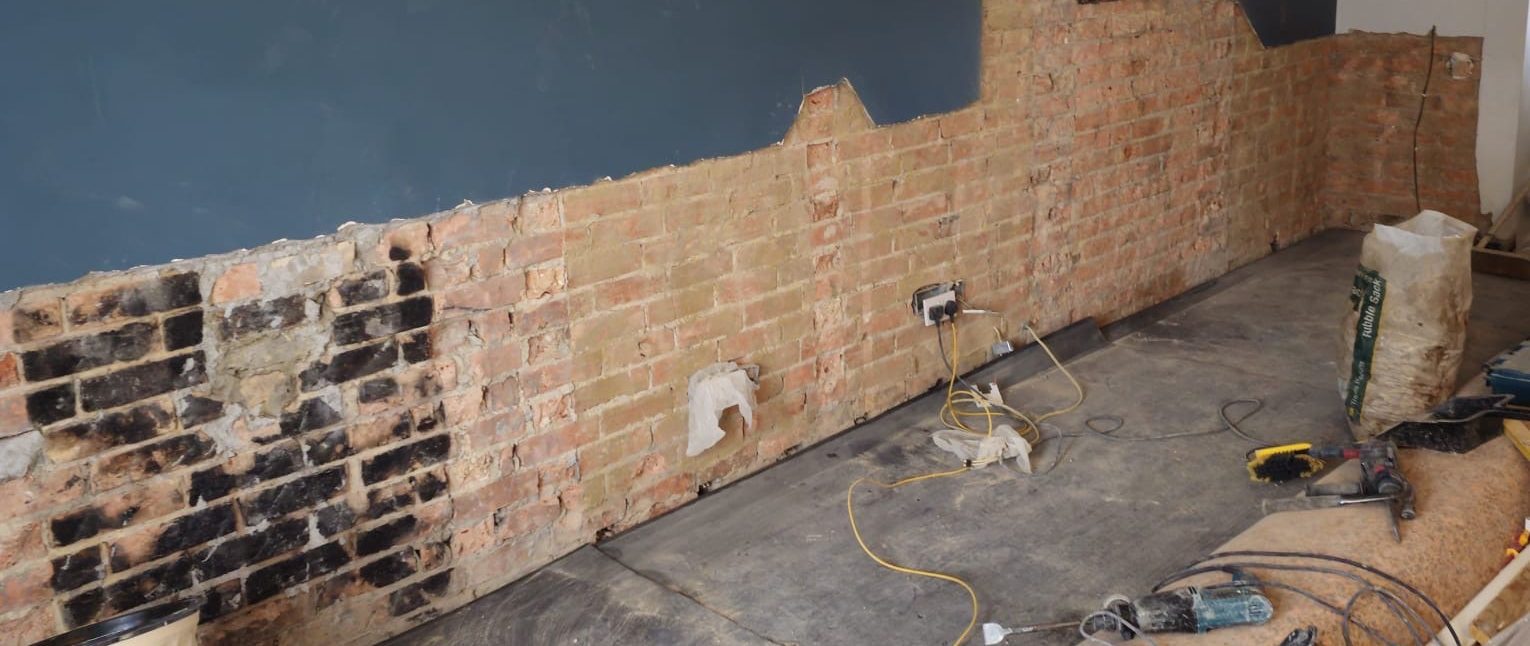
Rising damp occurs when moisture from the ground is drawn up through the walls of a building by capillary action. This process allows water to move upwards through porous building materials like bricks and mortar. Rising damp is usually identified at the lower portions of walls, typically up to about a meter high, and is often marked by damp patches, peeling paint, stained wallpaper, and even a powdery white residue known as efflorescence, which is caused by salts carried by the water.
If you leave rising damp untreated, it can weaken plaster, damage flooring, and eventually compromise the wall structure.
Penetrating damp
Penetrating damp, also known as lateral damp, is caused by water entering through the external walls, roofs, or any part of the building’s envelope that has become vulnerable to water ingress. This can happen due to damaged roofing, cracked walls, poorly installed gutters, or issues with window frames and external doors. Penetrating damp usually appears as large, spreading damp patches on walls or ceilings, often after rainfall. Unlike rising damp, it can occur at any level in a building. If left untreated, penetrating damp can lead to rot in wooden structures, damage to internal plasterwork, and potential issues with electrical systems if water reaches wiring.
Condensation
Condensation is the most common form of damp in homes and is primarily a result of bad ventilation. It happens when warm, moist air from cooking, showering, or drying clothes indoors hits cold surfaces, such as walls, windows, and tiles, causing moisture to collect and condense. Over time, condensation can lead to persistent dampness, peeling wallpaper, and the growth of mould and mildew, particularly in colder months when windows are less likely to be opened. Condensation is particularly problematic in areas like kitchens, bathrooms, and poorly ventilated spaces. If ignored, it can contribute to health problems, such as respiratory issues, and lead to a musty, unpleasant odour in the home.
For more details on the causes of damp, you can explore our guide on rising damp.
DIY damp proofing
Many homeowners take on the task of damp proofing their homes themselves, often to save on costs or to address minor damp problems quickly. DIY damp proofing methods, such as applying waterproof paints, sealants, or damp-proofing creams, can sometimes be effective for small areas or surface-level issues, like mild condensation or minor penetrating damp. These solutions are relatively easy to apply and can offer temporary relief by creating a moisture-resistant barrier.
DIY damp proofing can be effective for managing certain types of damp, particularly for mild condensation issues or minor surface-level moisture. Solutions like anti-condensation paint, damp-proof membranes, and improved ventilation can provide relief for less severe problems and can be a quick and budget-friendly fix. For condensation, for example, using dehumidifiers, installing extractor fans, or applying waterproof coatings can help control moisture and create a less hospitable environment for mould and mildew.
DIY methods generally work best for minor damp issues but often don’t address the root cause of the problem. For example, rising damp requires specialised damp proof courses that are professionally installed, penetrating damp may need external repairs to stop water from entering the building, and condensation often requires ventilation improvements. Without tackling these underlying issues, DIY treatments may only provide a short-term fix, and damp problems can resurface or worsen over time.
For serious or persistent damp, professional assessment and treatment are recommended to ensure a long-lasting solution and to prevent structural damage, mould growth, and further complications down the line..

How to damp proof a wall (DIY)
One common approach involves applying a damp-proof membrane. This involves attaching a plastic sheet or membrane directly onto the wall surface. The membrane acts as a physical barrier, preventing moisture from passing through to the interior walls and reducing the risk of damp-related damage. It’s essential to secure the membrane properly and to seal any edges or gaps, as even a small breach can allow moisture to seep through.
Alternatively, waterproof paint is another DIY option for damp-proofing. This type of paint is designed to create a moisture-resistant coating over the wall’s surface. It can be particularly useful for dealing with smaller areas or less severe damp issues, like minor condensation. However, waterproof paint is generally a surface-level solution and may only provide short-term relief, as it does not address the underlying source of moisture.
Both of these DIY methods are affordable and can provide some temporary protection against damp. However, they may need to be reapplied or reinforced over time, especially if the damp source remains unresolved. For more lasting results, it’s often best to consult a professional for an assessment and a more comprehensive damp-proofing solution.
Does DIY damp proofing work?
Damp proofing can be effective for managing certain types of damp, particularly for mild condensation issues or minor surface-level moisture. Solutions like anti-condensation paint, damp-proof membranes, and improved ventilation can provide relief for less severe problems and can be a quick and budget-friendly fix. To control condensation, try using dehumidifiers, installing extractor fans, or applying waterproof coatings. These steps help limit moisture and create a less favourable environment for mould.
However, DIY methods are often limited in scope and may not address deeper issues like rising damp or significant penetrating damp, which typically require professional treatment. Rising damp, for instance, originates from moisture in the ground that moves up through a building’s walls. This often necessitates a damp-proof course, injected damp-proofing, or other professional-grade solutions that reach below the wall surface to stop moisture at its source.
For those uncertain about tackling the job alone, it may be helpful to start with our DIY damp proofing tips. These can help assess whether the issue can be managed independently or if professional intervention is the safer and more effective choice for lasting damp protection.

Moisture Meters
To measure damp levels

Thermal Imaging
To detect cold spots

Salt Analysis
To assess the presence of moisture
