
Best Ways to Remove Mould from Walls and Ceilings

What causes mould on walls and ceilings

Mould forms when moisture builds on cold surfaces. Condensation is the most common cause, especially in kitchens, bathrooms, and bedrooms. Leaks in roofs, pipes, or window frames can also create damp areas where mould grows. Poor ventilation makes the problem worse as the air does not dry out.

Health risks linked to mould in the home

Mould can affect health if left untreated. It may cause breathing problems, skin irritation, or worsen conditions such as asthma. Children, older people, and those with weak immune systems are most at risk. Even small amounts of mould should be taken seriously.

Empty basement with exposed beams and plumbing pipes, ideal for renovation.

Schedule Your Free Property Survey Now!

Signs that mould is present

Mould is often seen as black, green, or brown spots on walls or ceilings. A musty smell is another warning sign. Paint or wallpaper may peel, and plaster can discolour. In some cases, mould is hidden behind furniture or under wallpaper and is only noticed when damage spreads.

Temporary cleaning methods for mould removal

Mould can be wiped away with warm soapy water or specialist mould sprays. White vinegar or bicarbonate of soda are also used in some households. These methods may remove visible mould for a short time but do not always stop it coming back.

Why bleach and shop products may not be enough

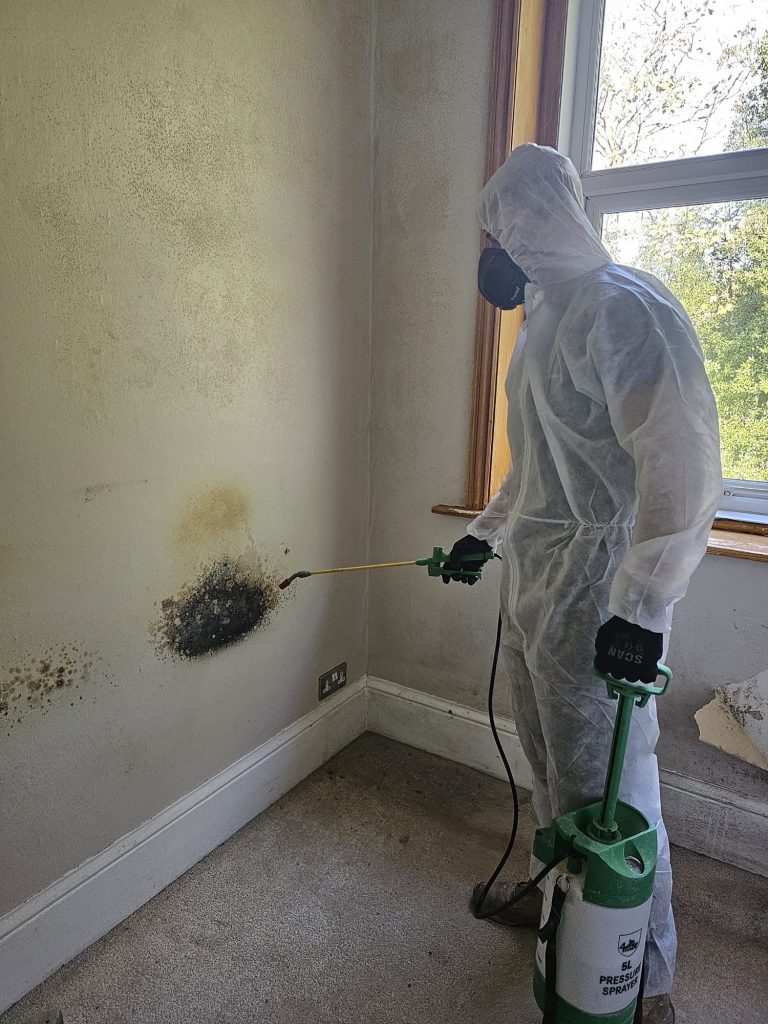
Bleach and sprays clean the surface but mould roots can remain in the wall or ceiling. This is why it often returns quickly after cleaning. Covering the area with paint will not solve the problem and may trap moisture behind the surface.

Mould removal
Mould and mildew growth

These can harm air quality and trigger health issues, especially respiratory problems.

Damage to walls and plaster

Damp can lead to bubbling paint, peeling wallpaper, and deterioration of wall materials.

Damp repairs
Structural weakening

Persistent moisture can weaken a building’s structure, which may lead to costly repairs in the long run.
When mould points to a damp problem

Persistent mould often shows there is a deeper damp issue. Condensation, rising damp, or penetrating damp can create ideal conditions for mould. If damp is not treated, mould will keep growing and may spread to other parts of the property.

To find out more about how we can help with your damp and mould issues complete the form on this page and we will be in touch.

Professional mould removal vs DIY methods

A professional service does more than clean the surface. A survey can find the source of moisture and the right treatment can then be applied. This might include improving ventilation, repairing leaks, or applying specialist coatings to stop mould growth.

How to prevent mould returning after cleaning

Once the area has been treated, steps can be taken to reduce the risk of mould coming back. Opening windows, using extractor fans, and drying clothes outside when possible can help. Keeping rooms warm and repairing any leaks is also important.

mould removal
Drying
Damp Proofing

We specialise in protecting residential and commercial properties from unwanted moisture through effective damp proofing treatments.

Damp proofing
Water Damage

Structural waterproofing acts as a preventive measure, ensuring that water is kept out and your property stays strong and secure.

Mould removal
Mould Removal

At Damp HQ, we specialise in providing full mould removal and prevention services that make sure your home remains mould free

Timber preservation
Timber Preservation

We provide comprehensive timber treatment services to protect your home or business from issues like wet rot, dry rot, and woodworm.

Damp HQ team

When to seek expert help for mould

If mould keeps returning, covers a large area, or affects several rooms, professional help is advised. Mould linked to damp will not go away on its own. An expert can identify the cause and provide long-term solutions.

Next steps if you need help

Mould on walls and ceilings should be dealt with quickly to protect your home and health. Professional treatment can stop it from coming back.

To find out more about how we can help with your damp and mould issues in and roound Bournemouth, Dorset complete the form on this page and we will be in touch.

Related articles:

How to Damp Proof Your Home

Black Mould: What You Need to Know

What’s the Difference Between Damp Proofing & Waterproofing a Home?